Help for Heroes
Digital transformation that helped Help for Heroes reach more veterans.

At a glance
increase in regular donations
increase in veterans reaching out for support
WCAG accessibility rating on key recovery pages
The challenge
Help for Heroes has supported over 27,000 veterans since its founding in 2007, helping people navigate the transition from military to civilian life through recovery, welfare, and wellbeing services for veterans and their families.
For years, Help for Heroes had supported veterans face to face - through rehabilitation centres, in-person events, and direct contact with the people who needed them. When the pandemic closed those doors, that model disappeared almost overnight. The website had to become what those centres and events used to be: the place veterans turned to for support, community, and the resources they needed, exactly when they needed them most.
A survey by the RCGP and OVA found that 55% of veterans experience health issues linked to their service, and 80% report their conditions worsening after leaving the military. This project was about building the platform that now had to carry the weight of a support system that no longer existed in person. It had to deliver real impact: faster access to support, a clearer path to services, and a platform that truly served those who served.
Before
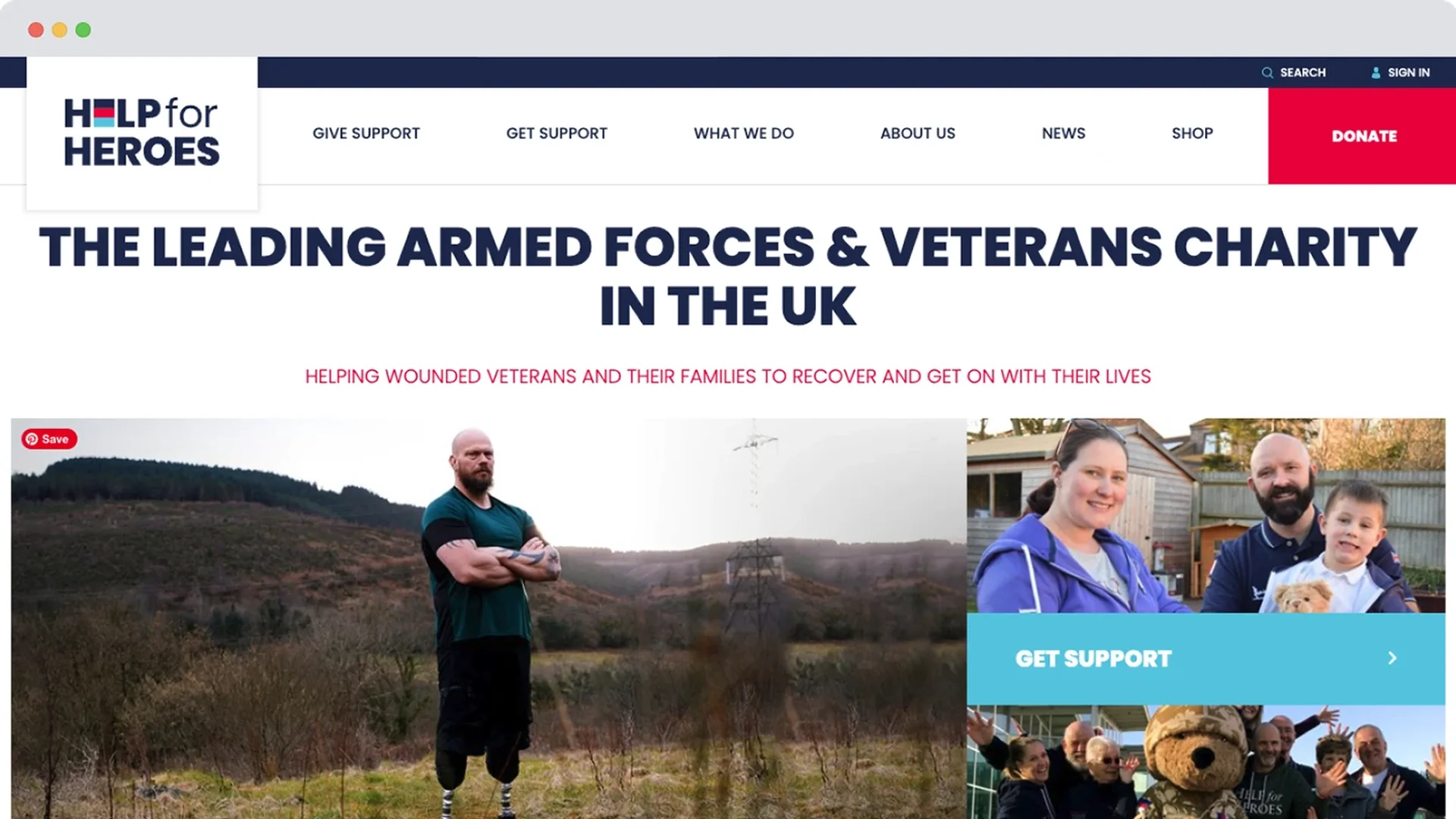
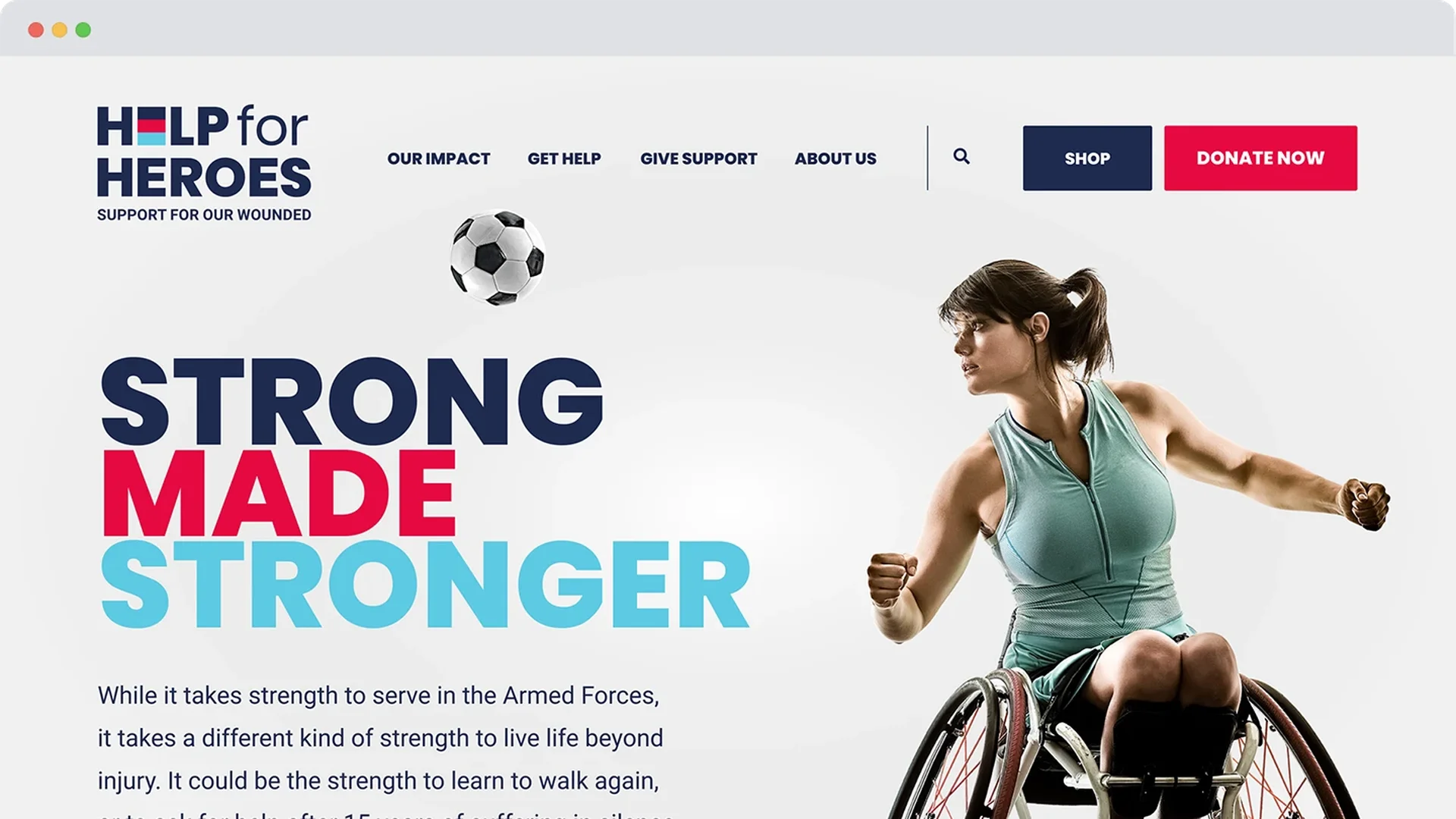
After
The solution
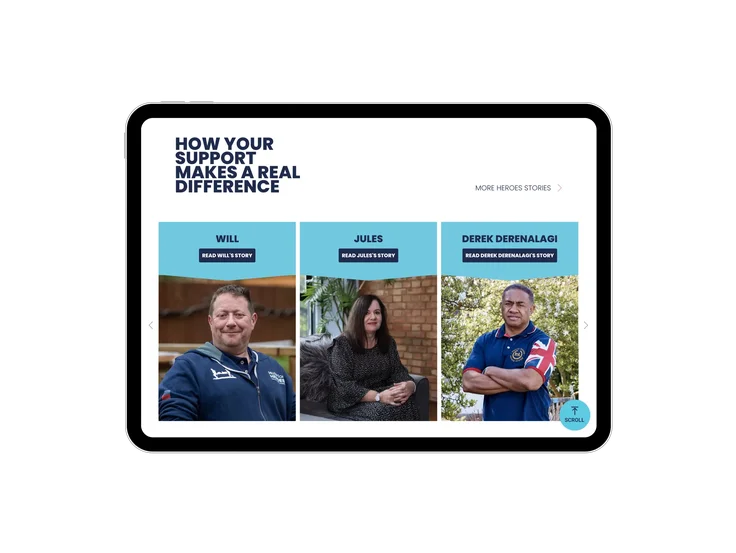
We started with the people who'd actually use it. The site's information architecture was rebuilt from the ground up - internal language and organisational structure that made sense to the Help for Heroes team but meant little to a visitor were stripped out, replaced with a structure built around what veterans needed to find and how fast they needed to find it. Accessibility was designed in from the outset rather than retrofitted afterwards, reflected in the AAA rating the platform achieved on key recovery pages.
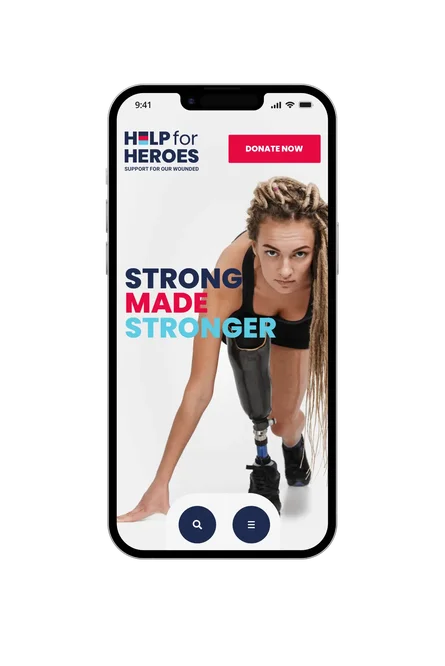
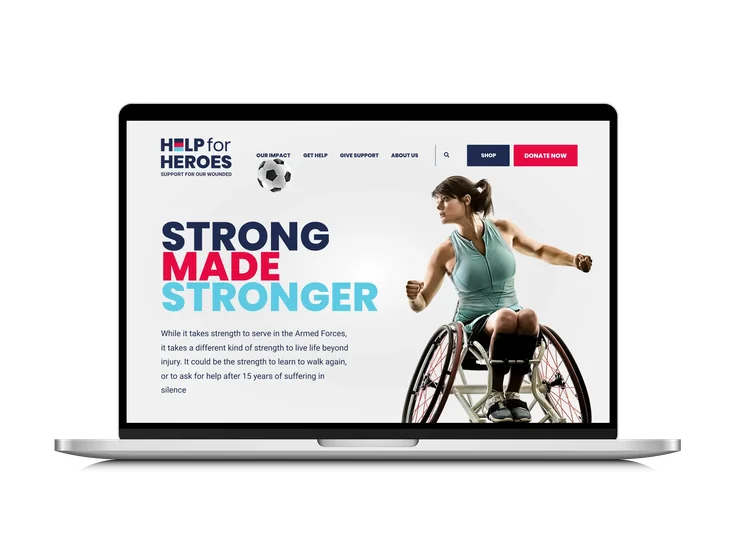
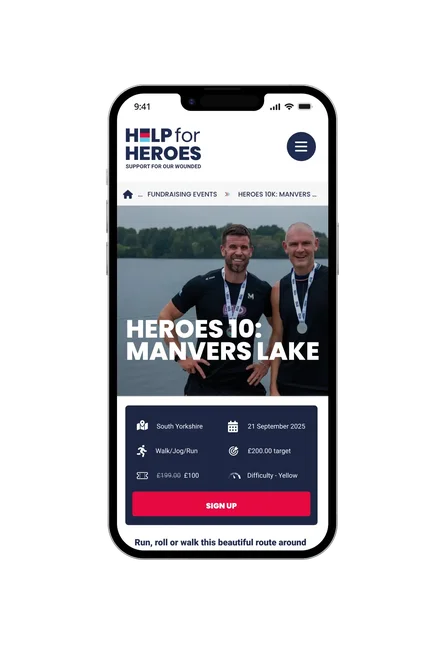
Help for Heroes had recently rebranded, but the existing site hadn't caught up - it no longer looked or felt like the organisation the charity had become. The new design carried the rebrand consistently across every device, so the site finally matched the identity behind it.
Underneath the surface, the platform connected to Donorfy, DotDigital, and Eclipse - bringing donation processing, communications, and back-office systems into one working ecosystem instead of three disconnected tools. That mattered as much for the Help for Heroes team managing the site day to day as it did for the veterans using it.
The impact
Regular donations rose 50% and one-off donations rose 8% following launch - strong figures for a charity that had just lost its main in-person fundraising channel. Rises in "Get support" form signups (9%) and dwell time on recovery pages (20%) point to something the donation numbers alone don't: veterans are finding what they need, and staying with it.
The AAA accessibility rating wasn't incidental. For veterans navigating health issues linked to their service, an accessible platform is often what determines whether they can use the site at all.
Behind the scenes, the integrations gave the Help for Heroes team one connected system in place of three - donations, communications, and operations working together rather than needing manual reconciliation. This ensures the platform and the team remain effective as the charity grows.

The way that this project has evolved and has been delivered shows we made the right decision to work with Giant Digital. Given its size and the many moving parts, combined with the number of people from different parts of Help For Heroes, the project went beyond smooth in terms of process. We're beyond excited to see what else we can do digitally over the next few years.
Jamie Walker, Head of Digital Experience at Help for Heroes





Make sure support reaches people when they need it most
Let's build a platform that helps people who rely on you find what they need, and act on it with confidence.